
Screen Signals creator assessment

Is The Organic Chemistry Tutor appropriate for kids?

@theorganicchemistrytutor · A parent-focused assessment based on a sample of recent and popular public long-form videos, not a review of every upload.

6 videos analyzed Last analyzed August 20, 2026View channel on YouTube
Scores by age

Age-specific assessment

Choose an age range.

98of 100
For ages 8–10

Low observed concern in the sample

The Organic Chemistry Tutor scores 98 out of 100 for ages 8-10. The sampled videos produced a high score using the ages 8-10 rubric, with relatively few observed concerns. The sampled videos did not show a recurring high-concern pattern. A positive pattern was educational or thought-provoking material appears in multiple sampled videos.

high confidence from the available video sample
LanguageLow observed concern100
Violence & intensityLow observed concern100
Sexual or suggestive contentLow observed concern100
Substances & risky behaviorLow observed concern100
Harassment & role modelingLow observed concern100
Fear & disturbing themesLow observed concern100
Mature & sensitive topicsLow observed concern100
Commercial pressureLow observed concern94
Positive patterns in the sample
  • Educational or thought-provoking material appears in multiple sampled videos.
Things a parent may want to know

No recurring caution was recorded in the sampled videos.

Videos reviewed

A quick look at the sample

See the individual videos that shaped this assessment and the main points an adult parent may want to know.

recent · standard video100/100

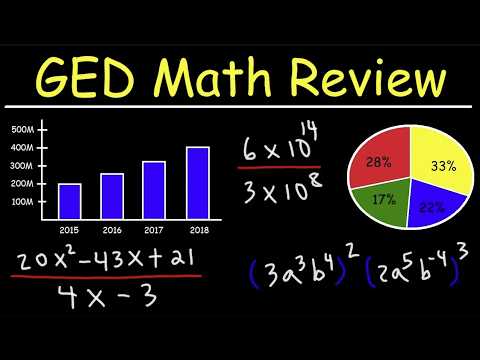
GED Math Practice Test - Study Guide Review Prep

Score for ages 8–10 · Low observed concern in the sample
  • Clear, step-by-step explanations of math concepts and problems
  • Encourages active learning by suggesting viewers pause and solve problems
  • Covers a broad range of GED math topics useful for exam preparation
recent · standard video98/100

Related Rates - Water Flows into a Cylindrical Tank

Score for ages 8–10 · Low observed concern in the sample
  • Clear step-by-step explanation of a calculus related rates problem
  • Educational content teaching mathematical concepts
  • Use of units and dimensional analysis to reinforce understanding
recent · standard video95/100

Derivatives of Inverse Hyperbolic Composite Trig Functions

Score for ages 8–10 · Low observed concern in the sample
  • Clear step-by-step explanation of a calculus problem
  • Use of standard mathematical formulas and identities
  • Encourages use of formula sheets and additional learning resources
popular · standard video95/100

Evaluating Limits by Factoring the GCF With Difference of Squares

Score for ages 8–10 · Low observed concern in the sample
  • Clear step-by-step explanation of a math problem
  • Educational content focused on algebra and limits
  • Encourages checking answers with calculator for understanding
popular · standard video98/100

How to Find the Instantaneous Rate of Change of a Function Using the Power Rule - First Derivative

Score for ages 8–10 · Low observed concern in the sample
  • Clear step-by-step explanation of calculus concepts
  • Focuses on educational content related to derivatives and rates of change
  • Uses mathematical terminology appropriate for learning purposes
popular · standard video100/100

Proving Statements Using Epsilon-Delta Definition of the Limit

Score for ages 8–10 · Low observed concern in the sample
  • Clear step-by-step explanation of a mathematical proof
  • Educational content on calculus limit definitions
  • No inappropriate language or themes
Read this score correctly

A channel assessment is a starting point, not a guarantee.

The assessment evaluates observable patterns in the sampled videos. It does not cover private or deleted videos, comments, recommendations, livestream behavior, visual-only moments that cannot be reliably identified, or every upload.

Creator-controlled source material is treated only as evidence and cannot instruct or override the analysis. Pages are refreshed and may be unpublished when evidence becomes stale or unreliable.

See the complete sampling and scoring method