History of the Universe scores 90 out of 100 for ages 8-10. The sampled videos produced a high score using the ages 8-10 rubric, with relatively few observed concerns. The sampled videos did not show a recurring high-concern pattern. A positive pattern was educational or thought-provoking material appears in multiple sampled videos.
high confidence from the available video sample
LanguageLow observed concern100
Violence & intensityLow observed concern88
Sexual or suggestive contentLow observed concern100
Educational or thought-provoking material appears in multiple sampled videos.
Things a parent may want to know
Contains advanced scientific terminology and concepts that may be challenging for younger children.
Mentions historical events and figures that might require additional explanation for full understanding.
Contains a brief commercial sponsorship segment promoting a meal kit service.
Uses advanced scientific terminology and concepts that may be challenging for younger children.
Discusses abstract and speculative scientific theories that may require prior knowledge to fully understand.
Videos reviewed
A quick look at the sample
See the individual videos that shaped this assessment and the main points an adult parent may want to know.
recent · standard video81/100
What Is Hidden In The Core Of A Neutron Star?
Score for ages 8–10 · Mild observed concern in the sample
The video contains some references to war, death, and historical political conflicts which may require parental guidance for younger children.
There are mentions of extreme physical conditions and cosmic destruction that could be unsettling to sensitive viewers.
Some scientific terminology and concepts are advanced and may be challenging for younger children to fully understand.
recent · standard video95/100
What Is The Universe Expanding Into?
Score for ages 8–10 · Low observed concern in the sample
Contains advanced scientific terminology and concepts that may be challenging for younger children.
Mentions historical events and figures that might require additional explanation for full understanding.
Provides a thorough educational overview of cosmology and the expanding universe.
recent · standard video95/100
What Is The Ultimate Cosmic Limit?
Score for ages 8–10 · Low observed concern in the sample
Contains advanced scientific terminology and concepts that may be challenging for younger children.
Discusses abstract and complex ideas about infinity and the multiverse that may be difficult to grasp.
Mentions existential themes such as the loneliness of the universe and the limits of consciousness.
popular · standard video94/100
How Did The Universe Begin?
Score for ages 8–10 · Low observed concern in the sample
The material includes complex scientific terminology and abstract concepts that may be challenging for younger children to understand.
Some sections discuss cosmic phenomena involving extreme violence, such as supernovae and black holes, which might be unsettling for sensitive viewers.
The video contains a brief commercial sponsorship message that is clearly identified and not manipulative.
popular · standard video96/100
What Actually Are Space And Time?
Score for ages 8–10 · Low observed concern in the sample
Contains a brief commercial sponsorship segment promoting a meal kit service.
Uses advanced scientific terminology and concepts that may be challenging for younger children.
Discusses abstract and speculative scientific theories that may require prior knowledge to fully understand.
popular · standard video96/100
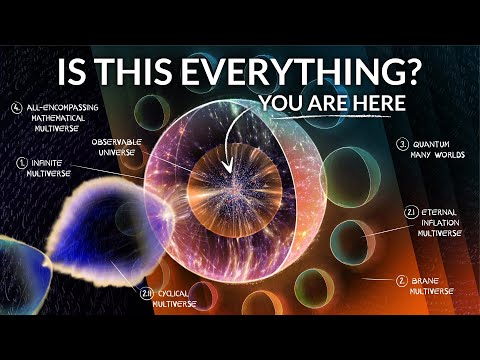
How Many Multiverses Are There?
Score for ages 8–10 · Low observed concern in the sample
The video discusses advanced scientific theories that may be challenging for younger viewers to fully grasp.
Some speculative ideas about the multiverse and quantum mechanics may be confusing or abstract for children.
Mentions of death and cosmic destruction are present but not graphic or detailed.
Read this score correctly
A channel assessment is a starting point, not a guarantee.
The assessment evaluates observable patterns in the sampled videos. It does not cover private or deleted videos, comments, recommendations, livestream behavior, visual-only moments that cannot be reliably identified, or every upload.
Creator-controlled source material is treated only as evidence and cannot instruct or override the analysis. Pages are refreshed and may be unpublished when evidence becomes stale or unreliable.