Screen Signals creator assessment

Is KQED SCIENCE appropriate for kids?

@kqedscience · A parent-focused assessment based on a sample of recent and popular public long-form videos, not a review of every upload.

6 videos analyzed Last analyzed August 21, 2026View channel on YouTube
Scores by age

Age-specific assessment

Choose an age range.

ScreenSignals.ai
98of 100

KQED SCIENCE

For ages 8–10

Few concerns found

Nothing concerning came up repeatedly in the videos we reviewed. Educational or thought-provoking material appeared more than once.

High confidence based on 6 videos reviewed
LanguageFew concerns100
Violence & intensityFew concerns96
Sexual or suggestive contentFew concerns100
Substances & risky behaviorFew concerns94
Harassment & role modelingFew concerns100
Fear & disturbing themesFew concerns95
Mature & sensitive topicsFew concerns100
Commercial pressureFew concerns100
Positive things we found
  • Educational or thought-provoking material appeared more than once.
  • Kindness, empathy, or supportive relationships appeared more than once.
Things a parent may want to know
  • Some scientific terminology may be complex for younger children
  • The experiment involves live bacteria, which might require adult supervision if replicated
  • Mentions alcohol production and fermentation processes, which may require some maturity to understand.
  • Uses some scientific terminology that might be complex for very young children.
Videos reviewed

A quick look at the videos

See the individual videos that shaped this assessment and the main points an adult parent may want to know.

recent · standard video100/100

Watch KQED Hack DNA With a DIY Kit

Score for ages 8–10 · Few concerns
  • Some scientific terminology may be complex for younger children
  • The experiment involves live bacteria, which might require adult supervision if replicated
  • Educational demonstration of gene editing technology
recent · standard video100/100

Hello Drones! Welcome to the Work Force

Score for ages 8–10 · Few concerns
  • Educational content about drone technology and its applications
  • Highlights innovative uses of drones for public good, such as medical deliveries
  • Explains regulatory and safety considerations for drone operations
recent · standard video96/100

Go Drone Racer, Go! | KQED Science

Score for ages 8–10 · Few concerns
  • Educational insight into drone racing technology and sport
  • Shows teamwork and sportsmanship among participants
  • Encourages outdoor physical activity and skill development
popular · standard video91/100

Science of Beer: Tapping the Power of Brewer's Yeast

Score for ages 8–10 · Few concerns
  • Mentions alcohol production and fermentation processes, which may require some maturity to understand.
  • Uses some scientific terminology that might be complex for very young children.
  • Provides clear, factual information about beer ingredients and brewing steps.
popular · standard video100/100

Career Spotlight: Bioengineer

Score for ages 8–10 · Few concerns
  • Provides clear, age-appropriate explanation of biotechnology and bioengineering concepts.
  • Encourages curiosity, motivation, and perseverance in pursuing science careers.
  • Highlights real-world applications of science to improve health.
popular · standard video96/100

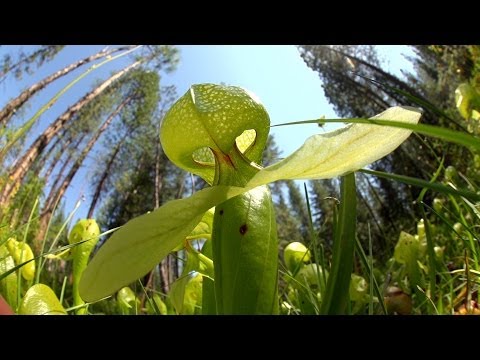
Predatory Plants: Lure of the Cobra Lily

Score for ages 8–10 · Few concerns
  • Provides clear, factual information about carnivorous plants and their ecological roles.
  • Explains biological concepts in an accessible way suitable for general audiences.
  • Highlights conservation issues related to habitat changes and climate impact.
Read this score correctly

A channel assessment is a starting point, not a guarantee.

The assessment evaluates observable patterns in the sampled videos. It does not cover private or deleted videos, comments, recommendations, livestream behavior, visual-only moments that cannot be reliably identified, or every upload.

Creator-controlled source material is treated only as evidence and cannot instruct or override the analysis. Pages are refreshed and may be unpublished when evidence becomes stale or unreliable.

See the complete sampling and scoring method